
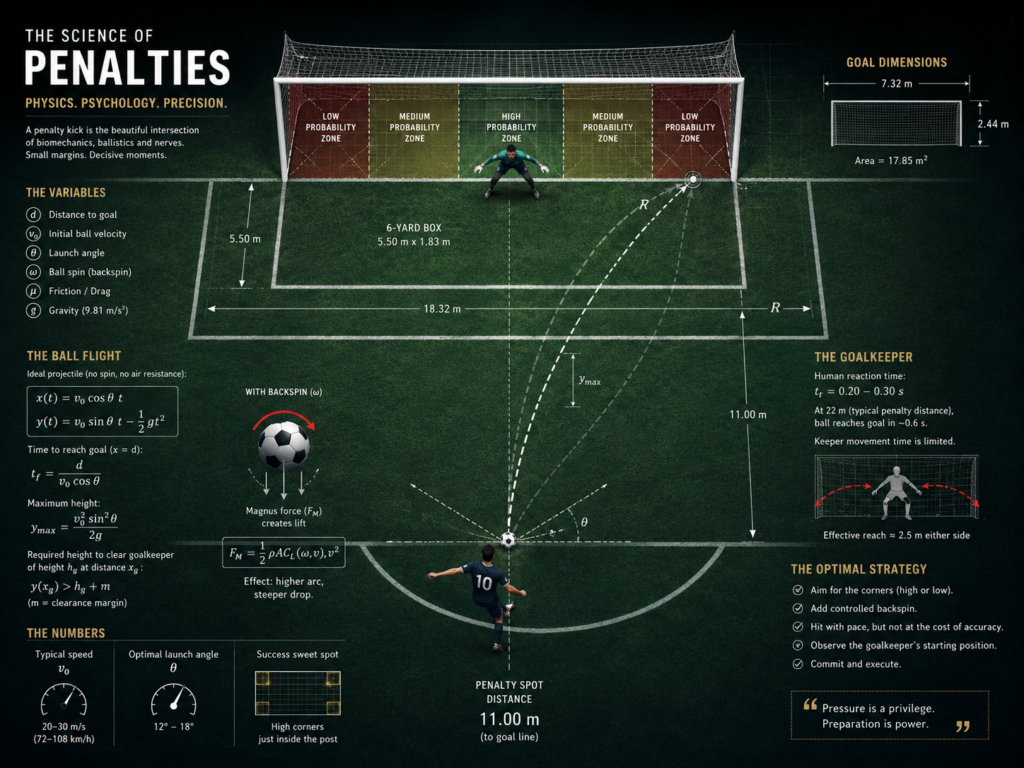
Penalty kicks are always dramatic affairs in a football match, but when it comes to the penalty shootout in a tournament such as the FIFA World Cup with the hopes and dreams of nations hanging on a single kick of the ball, then the drama is ratcheted up 10x. But why do so many players make a dog’s breakfast of their spot kick attempts, asks Simon Lewis.
The game of football has seen some of the most dramatic moments in the sporting world. Liverpool winning the Champions League after being 3-0 down to AC Milan at half-time in the 2005 final. Manchester United beating Bayern Munich in the 1999 Champions League final thanks to two miraculous injury-time goals. And Manchester City snatching the 2011/12 Premier League title away from Manchester United in the dying moments of extra time against QPR in the last match of the season, scoring two goals in three minutes, with the winner being the heart-stopping goal by AGUEROOOO!!!!!
So how is it that a player standing in front of a stationary football just 12 yards (aka 11 metres) from the goal, with just the goalkeeper in front of them and the rest of the goal wide open…. how can that qualify as one of the most dramatic moments in The Beautiful Game?
When it comes to a penalty shootout the drama is enormous because missing a penalty puts massive pressure on your team-mates and in particular your own goalkeeper. After all, scoring a penalty is theoretically incredibly easy, and the stats back that up.
According to sport psychologist Dr Paul McCarthy, in professional football around 85% of spot kicks are converted during regulation play. Get to extra time and that number drops to 75% as the pressure on the kickers mounts.
Why is there so much pressure on the kicker, what are the tactics they use… and are goalkeepers getting their tactics right?
Pressure on the kicker
The best spot kickers choose their spot to aim for before they run up… they reach the ball, kick with conviction, and it usually hits the back of the net. The problem is that (no doubt in the 1970s when keepers started saving a lot of penalties) players started messing with the formula. They broke the blueprint.
Some stood next to the ball and kicked from a standing position, giving the keeper less of a clue which direction the kick would be heading. Many players now use a stuttering run-up to try and keep the keeper guessing right up to the last minute, but the problem with that is the kicker will also be guessing until the last moment which way to kick. And keepers have factored that into the equation and are quick to pretend to go one way and then dive in the opposite direction to their initial movement. With the kicker having to adjust at the last moment it also raises the margin for error to either kick too close to the keeper or to kick wide of the goal.
And then there is the uber cool “Panenka”, named after Antonín Panenka of Czechoslovakia who scored the winning penalty in the 1976 UEFA European Championship final against West Germany.
Walking up up to take what could be (and was) the winning king in the shootout, Panenka cheekily chipped the ball straight at where legendary keeper Sepp Maier was standing… except the West German had flung himself to his left anticipating Panenka to be kicking to that side of the goal. The ball looped elegantly into the back of the net and Panenka skipped into the footballing lexicon. So cool. So very, very cool. And so calm and so very calculating… but if the keeper decides not to dive left or right then the kicker turns from uber cool into total fool. And it happens.
So that should be the solution for goalkeepers – do not move! Let’s take a look at the goalkeeper’s best tactics.
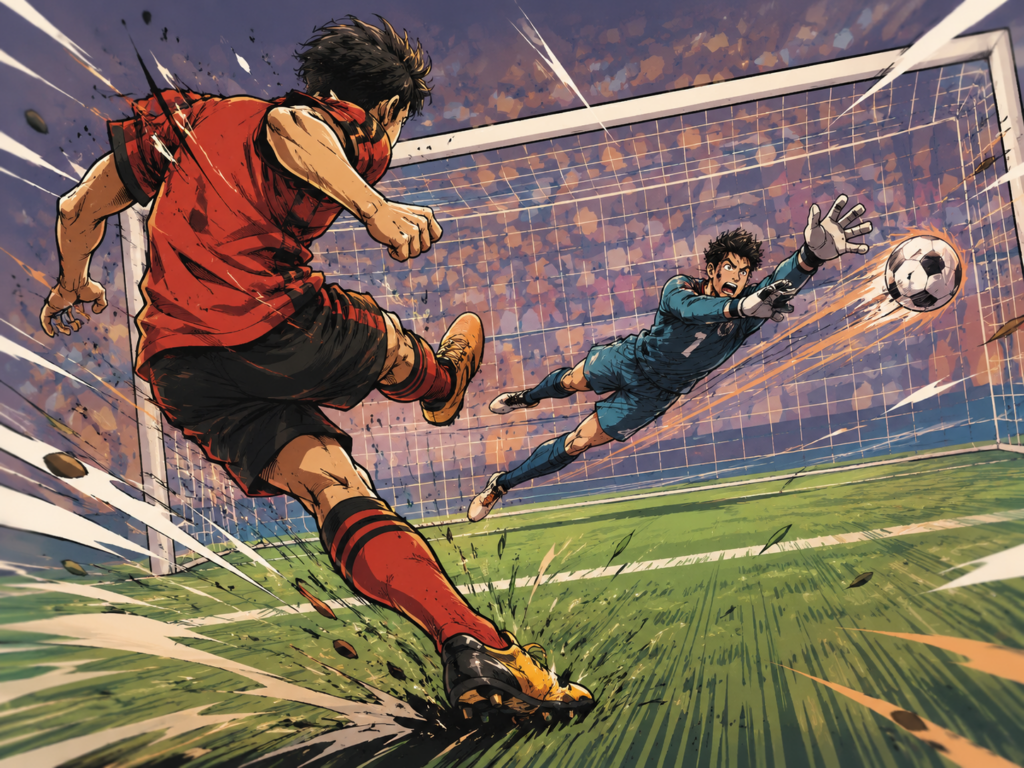
Should you stay or should you go?
The goalkeeper has a seemingly impossible task. The goal is big and their body takes up possibly just 15% of the total goal area when they are in a standing position. That’s why keepers become heroes when they save a penalty kick – the odds are so heavily stacked against them.
What is the secret? It generally boils down to luck, you would think… a 50-50 chance of diving left or right?
If the keeper dives before the kick is taken (and dives the right way) then he or she has the best chance of reaching as far as possible towards their chosen corner, therefore making it extra difficult for the ball to find the back of the net.
Do you wait to spot which way the kicker will hit the ball by watching for clues in their body or seeing which way their eyes are looking – left or right? That gives you a better chance of diving the right way… but you’re likely to be slightly late with your dive by waiting that split second longer, and if the kick is well struck and heading towards either goal post then it will be almost impossible to get across to stop a shot near the corner anyway.
Overall it seems like there is too much luck involved, but if we look at the stats and carefully analyse the odds in the keeper’s favour we might uncover a better playbook for keepers to follow.
Heading back to McCarthy’s corner again the good doctor’s statistics reveal that professional goalkeepers who don’t dive early save around one-third of the penalty kicks they face, as they are better placed to save kicks that aren’t angled into the corners. Might not sound like great odds, but let’s compare it to when keepers dive one way or the other. Dive right… keepers save just 12.6% of penalties they face. The number rises to just 14.2% if they jump to the left. Considering that around 15% of all penalties are kicked down the middle it backs up the decision to stand still until the ball is kicked… yet the stats reveal that only 2% of goalkeepers favour this route for most penalties they face.
So what about the kickers?
Swipe right… or swipe left?
Stats are interesting, but let’s talk tactics. There are a couple of factors that players don’t seem to have wised up to yet. Here they are.
Firstly, with all the pressure on the kicker, the last thing you want to do is add extra pressure on yourself by waiting until the last moment before deciding which way to kick. That is a recipe for disaster. Sure, it might work a lot of the time, but it’s reducing your chances of scoring and raises the chances that you will want the earth to open up underneath you when your failed spot kick sees your nation dumped out of the World Cup.
The best tactic is to decide which way you want to kick… and then just run up and kick the ball there. Connect hard and powerfully and the keeper is going to struggle to save the kick. Remember that most saves are from tentative kicks that aren’t placed in the corner. So… be confident and assured.
OK, got that… but where should you kick?
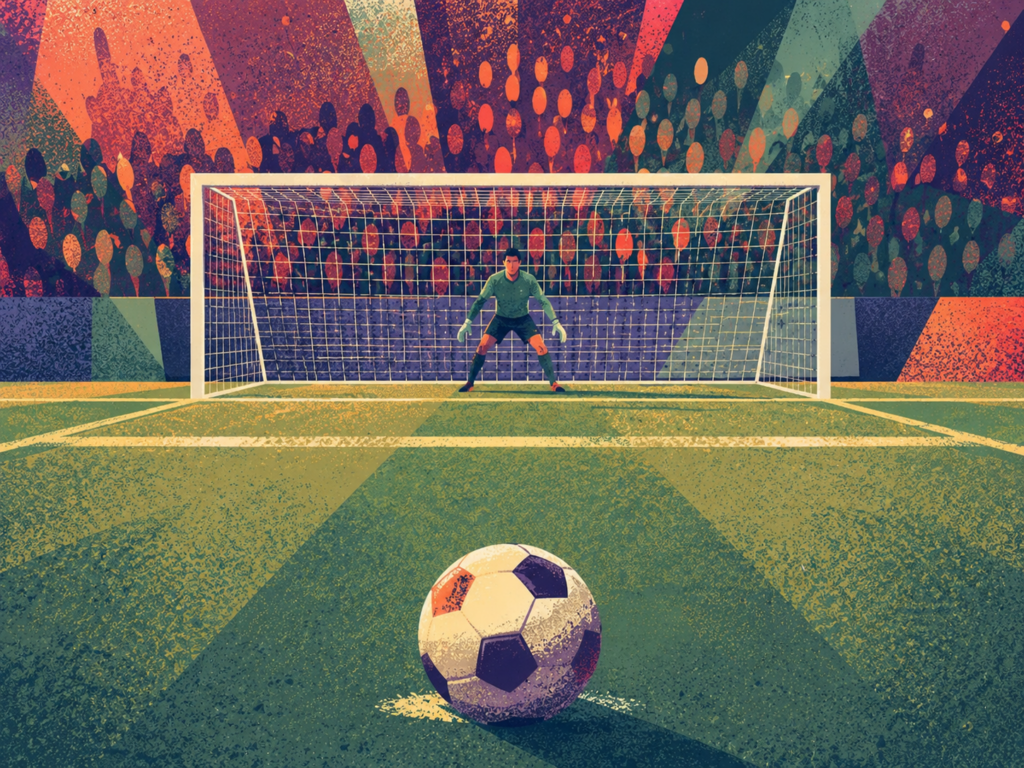
Don’t go straight
The Panenko is so cool but, as mentioned, the Fool Factor is super high, so rather don’t go there. Even though it’s so damn cool. Your best chance of scoring is hitting to the left or the right of the keeper… but which way? There are a few factors to consider. Firstly, are you left-footed or right-footed… and is the keeper left handed or right handed? Yes, these both make a difference!
When you kick a football in the normal way (with the ‘inside’ of your foot) there is a natural curve to the shot or pass. If you kick the ball with the ‘outside’ of your foot then it is most likely to curve or bend the ‘other’ way, but this is a more difficult skill. Kicking the ball with the flat ‘top’ of your foot (usually a ball that has bounced and is looping down towards your foot) is most likely to send the ball in a straighter path.
With all of the above taken into consideration, when the ball is sitting stationary on the penalty spot the easiest way to connect is with the ‘inside’ of your foot, but this means it is also likely to have some natural curve to it.
Watch carefully the next time a penalty is taken and you should see how the ball curves when it is kicked.
Go around the bend
Why is the curve of the ball relevant? Think about this: a right-footer kicking the ball from the penalty spot will have a natural curve that will see the ball curve from his right side towards his left. Now think about how that relates to the goal and the goalkeeper?
If the right-footed kicker aims their kick towards the left side of the goal then the ball will be curving AWAY from the goal. If they slightly misjudge the kick then it is more likely to curve and hit the post – or even miss the goal completely. It also means that, with the curve of the ball, there is more chance that the ball will start its curve “closer” to the diving keeper, as the curve will follow the direction in which the keeper is diving, giving them a better chance of stopping it.
Now consider if the right-footed kicker kicks towards the right post: the natural curve of the ball will bring the ball back in towards the right post. For instance, the right-footed kicker could aim to kick the ball at the right post and, in theory, the ball’s natural curve would curl it in slightly to slip inside the post and into the back of the net. GOAL! It’s almost as if it is curling around the keeper, if you can picture that.
Obviously a bad kick will miss the goal or be saved and a good kick will hit the back of the net regardless of which side the kicker aims, but kicking in the way that favours your natural curve does minimise your risk of missing the goal or kicking too close to the keeper.
There is a problem with this, though, in that if players always kicked this way then keepers would naturally always dive to the side of the goal that favours the kicker’s natural curve… but we’ll come back to this. For now the playbook is: kickers should decide where they want to kick the ball and hit it there with confidence… but also to kick it in a way that the natural curve of their foot will give them the best chance of curling it around the keeper, while still hitting the target.
Let’s take a look at what the impact of the keeper being left-handed or right-handed will have on your penalty kick.

A helping hand
A goalkeeper’s dominant hand is naturally going to be stronger at reaching, stopping or deflecting a penalty kick. Maybe not an enormous difference, but there will be a difference, and in a penalty shootout small differences can have a big impact.
The kicker should still focus on aiming towards the side of the goal that favours their natural curve, but knowing the keeper’s dominant hand can give the kicker an added advantage. That said, there is also the effect of gravity… but we’ll also get back to that.
Let’s say you kick the ball to the side that favours your foot’s ‘curve’ but the keeper dives early and in the correct direction. If this happens then the average tall professional goalkeeper is probably going to be covering most of the goal if they dive the right way… which leaves the kicker having to aim for a really small area of the goal. This is where the pressure comes in for the kicker: they know that, if the keeper dives the right way, then the odds are actually in the shot-stopper’s favour. The kicker theoretically then has a tiny margin for error, and that is the stress point for the kicker, and rightly so. The crowd sees him or her running up to kick a stationary ball with the goalkeeper looking quite small in the middle of the goal… but the kicker is aware that their kick most likely needs to be really accurate in order to beat a keeper that dives the right way. The kicker will effectively be aiming at a very small part of the goal, which will be just inside the post. Instead of having the whole goal to aim at, the kicker is actually having to hit a really small target – so suddenly the penalty kick starts to look very difficult.
Cut the percentages
That should highlight the pressure on the kicker, but a penalty shootout is also stressful for the keeper as they will be aware that there is a huge goal behind them and they will feel that they have very little chance of saving the shot. Add to this the fact that, even if they dive right, if the ball is struck well and into the corner of the goal – or close to the corner – then almost no keeper can save it.
There are certain kicks that the keeper cannot save even if they dive early… but what happens if they DON’T dive early? If they wait until they can see which way the kicker is going to shoot then a good kick into a corner will still find the back of the net. No question. However, that puts added pressure on the kicker to execute a good kick INTO the corner.
If the keeper dives early they have a chance to save shots headed for around 25% of the goal, but it also means that the rest of the goal is sitting wide open – call it 75%! If the kicker changes direction to trick the keeper then they will score with ease. So how about this as the playbook: the keeper accepts that a perfect kick in either corner WILL be a goal, so therefore the rule should be DON’T dive early!
How does that benefit the keeper? Firstly it means that if the kicker tries a Panenka then it will be saved with ease. Secondly, if the kick isn’t in the corner but is a few feet inside the post then the keeper diving late has a better chance of saving the kick. By not diving early the keeper can also almost guarantee that they will save kicks aimed to around 60% of the goal. Those are pretty fine odds. By diving early you risk leaving 60-75% of the goal unguarded, meaning that if you dive early you are toast.
If this is the most important penalty you are facing in your career and you need to save it to keep your side in the World Cup or to win it… well, why would you dive and give away over half of your goal to that crafty striker? Rather accept that if they hit it into the corner (if they can under all that pressure!) then they deserve to win as you have almost no chance of saving a kick like that anyway. Rather put them under pressure by forcing them to aim for a very, very small window of World Cup opportunity…
Measure for measure
The goal is 24 feet wide, with each half measuring 12 feet wide. The keeper can easily block shots three feet to his or her left or right in a standing position, which means that the kicker’s target area on either side of the keeper is reduced to nine feet. With most keepers probably being six feet tall, a simple dive to their left or right suggests they should also be able to dive to save shots up to eight feet to their left or right if they wait for the kicker to shoot before they dive. That leaves an area of roughly four feet for the kicker to aim for into either corner. However, because they want to keep it as far away from the keeper as possible, and because they don’t want to kick it too near to the post, that theoretically leaves them with a space of just two feet to “aim” for with their penalty kick.
Suddenly the odds don’t sound quite so good for the kicker and the goal starts to look a whole lot smaller.
Perhaps now you might empathise with the players who take penalty kicks!
As a keeper I would lap those odds up and stand still until the kicker hits the ball rather than risking throwing my body one way or the other and watching helplessly as it flies in the other direction and into the back of the net. For me, that’s the keeper’s playbook sorted out. Wait before you dive. This also makes it harder for the kicker. But I did say we would talk about gravity…
Gravity sucks… keepers
So far the kicks I have described have all been kicks hit at waist height or below. Oddly, that’s where most kicks seem to be hit… LOW!
This doesn’t make sense for two reasons. Firstly, a keeper diving low to their left or right will be falling towards the ground due to the scientific principle known as gravity. But there is more to this story of gravity, and this is where the balance swings completely… and to the advantage of the kicker. If the keeper stands still and the attacker kicks the ball straight then the keeper should be able to block any shot above his or her head and four or five feet to either side of them. If they dive to their left or right towards the bottom corner of the goal then they will cover a lot of the goal, with just around four or feet inside the post being a zone likely out of their reach, depending how quick they dive and how hard the ball is kicked.
However, if the kicker has any sense they will aim their kick at chest high or above… and towards the top corner. If the keeper dives up to their left or right to attempt to save a kick travelling above chest height then gravity will start pulling them down as they dive, meaning that they will be unable to reach shots heading towards the top corners of the goal. However, unlike in the case of a kick into the bottom left or right corner, a kick up to the top left or top right corners will open up a much bigger area to aim for safe in the knowledge that no keeper can realistically cover that space.
The top corner is without doubt where you should be kicking, with the added benefit that you don’t have to kick it as hard as a low shot in order to beat the diving keeper. You can rely more on just timing the ball well. There is far less chance of missing the goal and it will also be almost impossible for the keeper to stop the shot.
Deny the keeper the upper hand
But wait… there’s more to this gravity thing. If the keeper anticipates that you will be kicking up to the top corner and they dive the right way you will still have the upper hand as the diving keeper will eventually start falling to ground and there will literally be almost no way for them to reach the ball as their body starts falling earthwards. And it doesn’t have to be right into the top corner… there is a far greater safe area to aim for in the top corners compared to if you are kicking towards one of the bottom corners.
I mentioned the keeper’s strong hand… well, if you factor in the keeper’s strongest hand and if you kick to the side of the goal that will result in their strong hand being ‘under’ their body (ie closer to the ground, while their weaker hand is closer to the crossbar) then as they fall to the ground the hand they will be waving towards the ball will be their weaker hand. Combine their body falling towards ground and their weaker hand flapping at a ball rising above them, then this is without doubt the way to kick a penalty to win the World Cup (or to keep your side alive in a penalty shootout).
Natural selection
What about the natural curve of the ball when kicking to the top corner? Well, that’s not such an issue when you are kicking up towards either corner as you have so much more margin for error as no keeper can reach up to cover the corners while they start falling down to earth. Your tactic should rather be to kick in the direction that will have the keeper’s weaker hand above them.
Players practicing spot kicks should always only kick between chest and head height and towards both corners (ie with their natural curve and against it), as then they would have the skill and confidence to bury almost every spot kick as the margin of error is so much more in their favour. The pressure on them would also be massively reduced. If you factor in kicking in the direction that forces the keeper to have their weaker hand above their body you will then have the recipe for winning a World Cup penalty shootout every time.
Now all you have to do is get your team into the final and force your opponents through 120 minutes and into the shootout. Simple.
There is just one problem, though: if everyone followed this most sensible playbook we might never see a missed penalty ever again!!
* Simon Lewis is the Editor of The Ball online sports magazine